

We are committed to providing personalized care in a comfortable, supportive environment.
Who We Are

Jessica Mutsch, LCSW
Meet Jessica, the Owner and Operator of Remedy Laser Therapy.
Jessica holds a Masters Degree and has worked as a Psychotherapist for more than a decade. After experiencing life‑changing results from PBM/Photobiomodulation laser therapy, she set out to expand the way she helps people heal.

Dr. Nauman Rashid
Our clinic is overseen by our Medical Director, Dr. Nauman Rashid. Dr Rashid earned his Doctorate of Medicine at Meharry Medical College School of Medicine.
In his 20 years of experience Dr. Rashid has served and helped many patients. He was even named as a Top Doctor by Atlanta Magazine in 2022 while working in Emergency Medicine in Atlanta, GA.
Nurse Practitioners
We have a wonderful team of nurse practitioners!
Professional, caring and knowledgable NPs with years of experience here to diagnose and administer treatments.
Our Laser System
Aspen is the gold standard in medical grade laser treatment systems. We utilize Aspen's industry leading, Class IV laser.
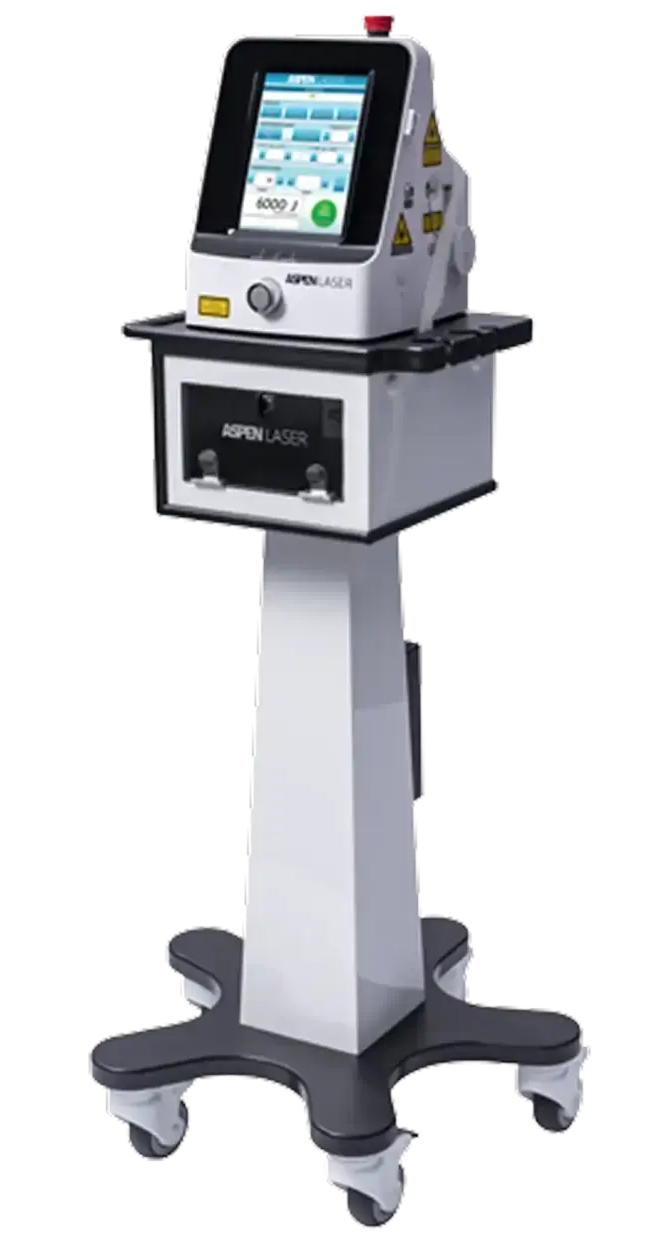
Apex by Aspen Laser
High-power Class IV laser device
Uniquely offering up to FOUR wavelengths (670 nm, 810 nm, 980 nm, 1064 nm) and ~47 W combined output
Ideal for clinics wanting ultimate flexibility and deep tissue impact
See more at ASPEN
How Remedy Laser Therapy was born
Listen to our appearance on the Always Andersonville podcast to learn more about how Remedy Laser Therapy was created and some of the science that makes red laser therapy so amazing.

The Science Behind Our Red Laser Therapies
Primary molecular target & energy metabolism
The most widely supported mechanism centers on cytochrome c oxidase (Complex IV) in mitochondria. When photons in the deep‑red/near‑IR range are absorbed, they can alter the redox state of cytochrome c oxidase, improving electron transport chain efficiency and increasing mitochondrial membrane potential. The result is higher ATP production, giving cells more energy to drive repair processes and restore ionic balances that reduce nociceptor (pain receptor) sensitization.
Immune modulation & inflammation
At the cellular level, photobiomodulation shifts immune cell behavior: macrophages move from a pro‑inflammatory (M1) phenotype toward a pro‑repair (M2) phenotype, cytokine profiles change (reduced TNF‑α, IL‑1β; increased IL‑10), and neutrophil infiltration and oxidative bursts are tempered. These changes reduce edema and pain and accelerate matrix remodeling in tendons, ligaments, and muscle.
Photobiomodulation
At a high level, red and near‑infrared light penetrates tissue and is absorbed by specific cellular chromophores, triggering a cascade of biochemical events that shift cells from a stressed, inflammatory state toward repair and normal function. Clinically this translates into reduced pain, less swelling, faster musculoskeletal healing, and measurable benefits in some neurological conditions.
Nitric oxide, reactive species, & signaling
Light can also dissociate nitric oxide (NO) bound to mitochondrial proteins, freeing NO to act as a vasodilator and signaling molecule. This increases local blood flow and oxygen delivery while initiating downstream signaling pathways (cGMP, protein kinases) that promote tissue repair and modulate pain pathways. Controlled increases in reactive oxygen species (ROS) act as second messengers to upregulate protective genes (antioxidant enzymes, heat‑shock proteins) rather than causing damage when doses are appropriate.
Neural effects and neuromodulation
In nervous tissue, the same mitochondrial and NO‑mediated mechanisms improve neuronal bioenergetics, reduce excitotoxicity, and promote axonal sprouting and synaptic plasticity. Transcranial or peripheral application can modulate neurotransmitter release and inflammatory signaling in glia, which helps explain observed benefits in some neuropathic pain syndromes and early studies in stroke and traumatic brain injury.
Frequently Asked Questions
How does it work?
Using penetrative red and near-infrared light at specific wavelengths and amplitudes, our treatments stimulate cell mitochondria to produce more ATP. This results in cellular regeneration to promote healing and reduce inflammation. At Remedy Laser Therapy, we offer treatments that are clinically proven to manage a variety of conditions.
What laser is used in treatment?
We utilize the Aspen Class IV Laser — a top-tier, FDA-cleared device renowned for its precision and safety. Widely considered the gold standard in laser technology.
This system is a HILT device — High‑Intensity Laser Therapy. It is a Class IV therapeutic laser designed for deep‑tissue photobiomodulation. Clinically, it is often referred to as medical laser therapy or clinical laser therapy, because it is used in healthcare clinics for pain reduction, inflammation control, stimulated cellular activity and comprehensive repair.
How are treatments administered?
A handheld wand is positioned directly on, or slightly above, the skin over the affected area, where it delivers a gentle therapeutic beam. Safety glasses are worn at all times.
Is laser therapy FDA approved?
Yes! The Aspen Laser system is used at Remedy Laser Therapy is FDA-cleared for pain relief and inflammation reduction. It is trusted, clinically proven technology used by healthcare providers nationwide.
How many treatments will I need?
Most acute conditions typically require only 5-6 treatments. Chronic conditions generally take longer and may require 6-12 treatments as well as one or two follow-up treatments each month. Treatments can be administered as frequently as every other day.
Does laser therapy treatment hurt?
No! Most patients experience a warm, often soothing sensation during treatment. Red laser therapy is non-invasive with a great track record.
What are the side-effects?
As red therapy is non-invasive, the vast majority of patients exhibit no side effects. On rare occasions patients have developed mild redness at site of application which clears within a day or two.
What should not be treated by laser therapy?
Red laser therapy cannot be used in active malignant cancers, cancerous lesions, or tumors, nor on the abdomen during pregnancy, or directly on growth plates in minors.
What are the limitations to red laser treatments?
Like all health treatments, red laser therapy serves as a valuable complementary treatment, but it should not be considered a substitute for care provided by your specialty physician or healthcare team.
Where are you located?
We are conveniently located in the lovely Andersonville neighborhood of Chicago.